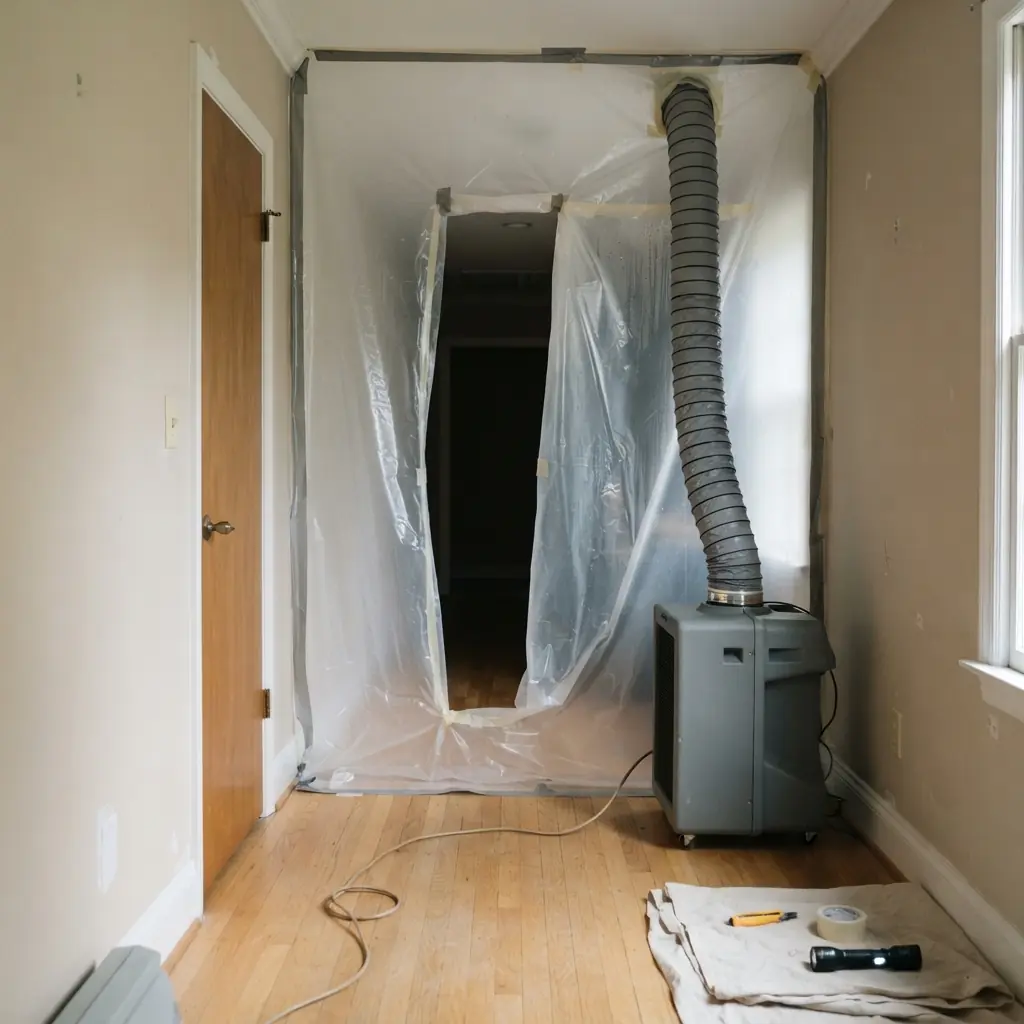
Mold in three rooms is not three small jobs. It points to a moisture problem that reaches the whole house, usually through a leak, a humidity issue or a past flood.
A job this size needs a plan before anyone starts cutting.
Starting with the cause
A house that has mold in several rooms usually has one or two root problems: a long-term leak, an HVAC system that spreads damp air, or a flood that was never fully dried.
A crew should trace the pattern before quoting. Treating each room separately without finding that source means paying to do the job twice.
Staging and containment
Big jobs are usually done in sections. The crew seals one area, does the work, dries it, and moves to the next. Air scrubbers pull spores out of the air while the work goes on.
Ask how the crew keeps finished rooms clean while others are in progress, and what the order of work will be. A clear schedule on paper helps you plan around it.
Living through it
Depending on the scope, you may need to stay somewhere else for part of the job, especially if anyone in the house has asthma, allergies or a weak immune system. The crew should talk this through with you.
Ask about pets, medications and valuables too. Moving a few things out of the way beforehand makes the work go smoother.
Before you commit
A large mold job can be expensive, so get the scope and any rebuilding in writing. Ask whether a separate inspector can check the work when it is done.
Tell us your town, and we will pass the request to a local crew that serves it.
Frequently Asked Questions
Can we stay in the house during removal?
Sometimes. If the work areas are well sealed and the rest of the house is protected, many families stay. Larger jobs or households with respiratory concerns may need to leave for part of it. Ask for an honest recommendation based on your situation.
Why is whole-house work priced differently?
More rooms mean more containment, more materials to remove, more equipment time and more coordination. The scope can also change as walls are opened. A good estimate lists each area separately so you can see what is driving the total.
Who does the rebuilding afterward?
Often a separate contractor, though some crews handle it. Ask whether rebuilding is in the quote. If not, get that work scoped and priced separately, and make sure the area is confirmed dry and clear before anyone closes up walls.