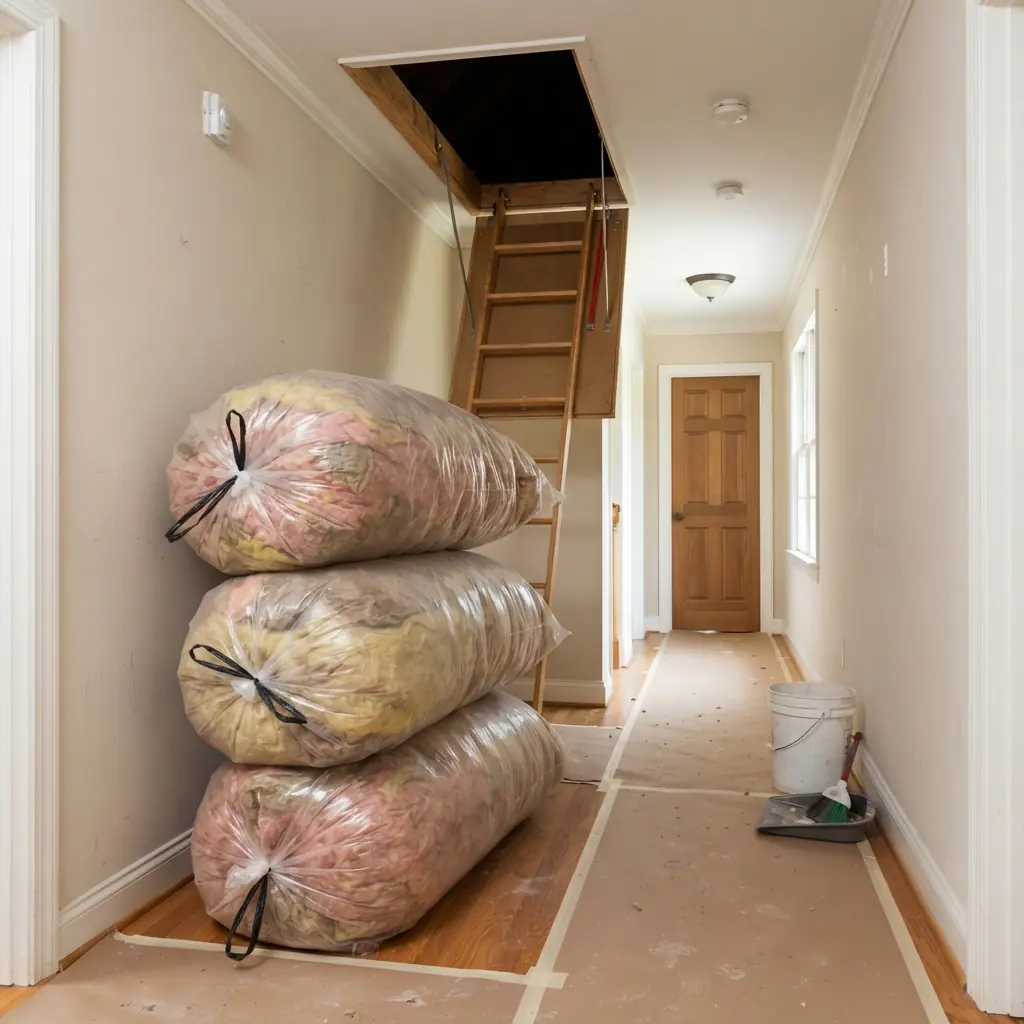
Attic mold jobs run from a small patch near an old leak to growth across the whole roof deck. The price follows the scope, and the scope is mostly decided by what has to come out.
Here is how to read an attic estimate.
Insulation is often the big item
Mold and wet insulation tend to go together. Removing insulation takes labor, bagging and disposal, and installing new insulation afterward is another cost.
If only part of the attic is affected, have the crew mark which sections they plan to remove and which stay. That keeps the scope clear.
Decking and framing
Surface mold on roof decking is cleaned. Wood that is soft or rotted needs repair, which may be a roofer or carpenter job rather than part of the mold work.
Ask whether the estimate covers only cleaning or also treatment, sealing and any repair. Be clear about who is responsible for each.
Ventilation and the source
Fixing the leak or the airflow that caused the mold is a separate job from cleaning it. A blocked soffit vent or a bathroom fan that vents into the attic is common, and the fix may be modest.
A crew that looks at the cause and tells you plainly what it will take gives you a better basis to compare estimates.
Making the estimate useful
A good attic estimate names the area, what comes out, what gets cleaned and what is left for another trade. If yours does not, ask for it.
Send us your address, and we will pass the request to a local crew that serves your area.
Frequently Asked Questions
Why is insulation removal so important in the estimate?
Wet or moldy insulation can keep feeding growth and is hard to clean. Removing it takes time and disposal, and replacing it adds more. The amount affected is often what separates a small attic job from a large one. Ask for the sections to be listed.
Will I need a roofer as well?
If the leak or ventilation issue that caused the mold has not been fixed, yes. Mold crews clean and remove mold, but roof repair and some ventilation work belong to other trades. Ask the crew which parts of the fix they handle and which they refer out.
Can attic mold be treated without removing insulation?
Sometimes, if the insulation is dry and the growth is limited to wood surfaces. If the insulation is wet or visibly moldy, removal is more likely. The crew can check readings and show you where the problem sits before deciding.