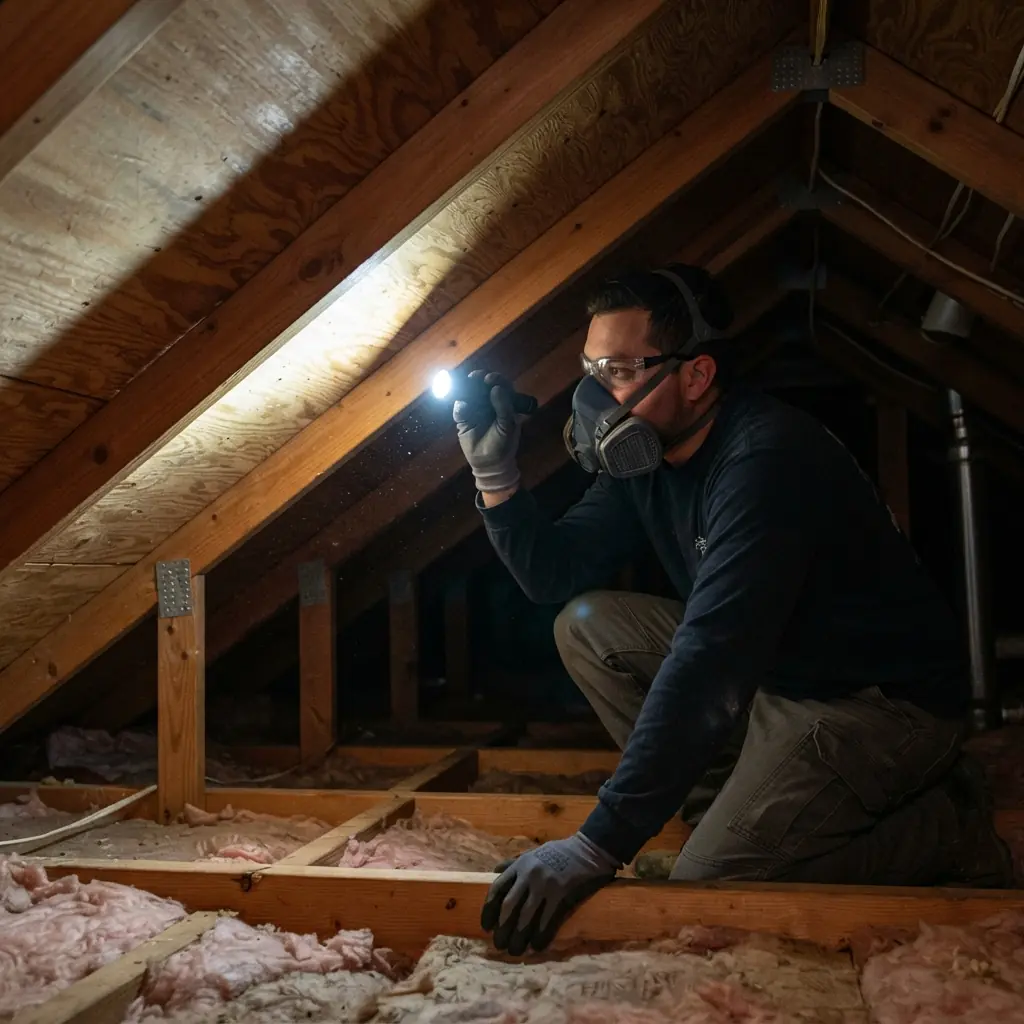
Most people only go into the attic to fetch boxes. If you open the hatch and the air smells stale, or you see dark patches on the wood, it is time to look closer.
Attic mold has a few usual causes, and knowing them helps you ask better questions of whoever you hire.
Where attic mold comes from
A slow roof leak is the obvious cause. Less obvious is warm, damp air from bathrooms or the living space leaking up through gaps and meeting a cold roof deck. That moisture condenses and the wood stays damp.
Poor ventilation makes it worse. If the attic cannot breathe, damp air hangs around. Mold then spreads along the roof deck, rafters and insulation.
What the work involves
The crew checks the roof deck and framing and finds where the moisture is coming from. Wet or contaminated insulation is typically removed and bagged. Wood surfaces are cleaned, and anything softened by rot is marked for repair.
Containment matters in an attic too, because the hatch is directly above your living space. Ask how the crew will keep dust and spores from dropping into the house.
Fixing the cause
Cleaning the decking without fixing the leak or the airflow just resets the clock. A crew should tell you what they saw: a flashing problem, a blocked vent, a bathroom fan that vents into the attic.
Some of those fixes belong to a roofer or an HVAC contractor, not the mold crew. That is normal. Roofing and plumbing repair are outside what we refer, so find out who they would bring in.
Next step
If you suspect attic mold, a photo helps. Send us your address and what you found, and we will pass it to a local crew that serves Sandy Springs.
They will inspect first and tell you what the job involves.
Frequently Asked Questions
Is mold in the attic dangerous?
Mold can bother people with allergies or asthma, and heavy growth can damage wood over time. It is not something to ignore, but it also does not mean you must panic. A crew can look, tell you how far it has spread, and explain whether cleaning or replacement is needed.
Does attic insulation have to be replaced?
Often, yes, if it is wet or has mold on it. Insulation soaks up moisture and holds mold well, and it is hard to clean. Dry, clean insulation nearby may be left alone. The crew should tell you which sections they plan to remove and why.
Who fixes the roof leak that caused it?
A roofer, not the mold crew. Mold removal handles the growth, but a leak or ventilation problem has to be fixed by the right trade, or the mold returns. Find out whether they can recommend someone, and get the leak sorted before any cleanup.