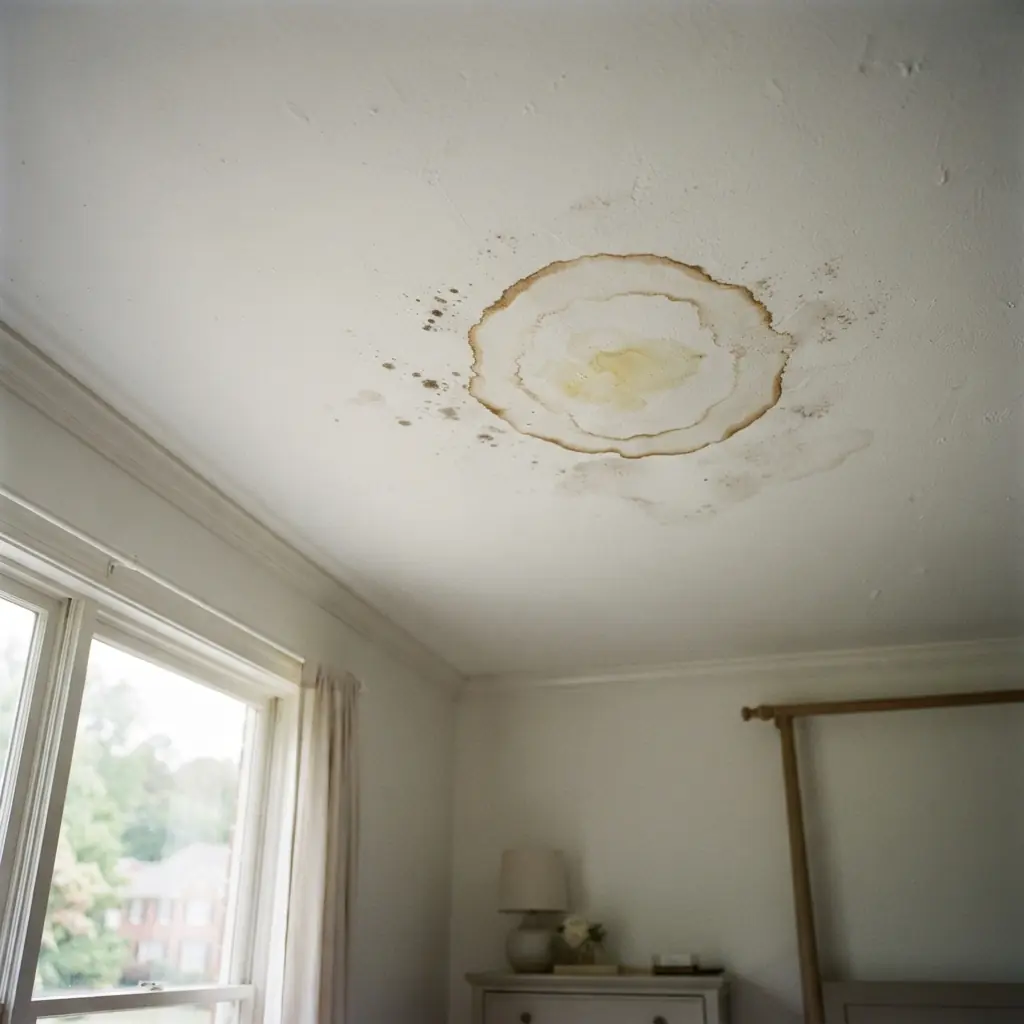
A stained ceiling is easy to paint over and hard to ignore for long. If the mark grows, or returns after painting, water or mold is still at work above it.
This page covers how a stained ceiling is checked and when it gets cleaned or replaced.
What the stain tells you
A brown ring usually means water passed through and dried at the edge. Dark spotting can mean mold. Both can exist together.
The stain is a clue to look above it. The attic, the roof, a bathroom, or plumbing running overhead are the usual suspects.
Clean, seal or replace
A small, dry stain with no growth may be cleaned and sealed with stain-blocking primer. If the drywall is soft, sagging or has growth on the face or back, the section is cut out and replaced.
Have the crew check moisture readings before painting. A dry ceiling is the minimum for a lasting fix.
Fix what is above
Finding the cause matters more than the ceiling. A roofer deals with a leak, an HVAC contractor with condensation on ducts, a plumber with a pipe.
The mold crew handles the growth and affected materials. Work out who does what, and be sure the source is addressed before the ceiling goes back up.
A cleaner ceiling, and a dry one
If you have a stain you cannot explain, start by finding out what is above it. Take a photo, and note any rain or plumbing use before it appeared.
Send us your address, and we will pass the request to a local crew that serves Sandy Springs.
Frequently Asked Questions
Will stain-blocking primer fix it?
It will cover the mark, but it will not fix a leak or remove growth. Use it only after the area is dry, clean and any damaged drywall has been replaced. Painting over a damp or moldy ceiling hides the problem and lets it continue.
How do I find the source of a ceiling stain?
Check the attic or space above for damp insulation, wet wood or dripping pipes. Notice whether the stain gets worse after rain, showers or when the air conditioning runs. A crew can use a moisture meter and a camera to trace it.
Is a sagging ceiling safe to leave alone?
A sagging ceiling can fall, so keep people and items away from under it and have it checked soon. Do not poke at it. A crew or a general contractor can assess it and tell you how it should be handled.