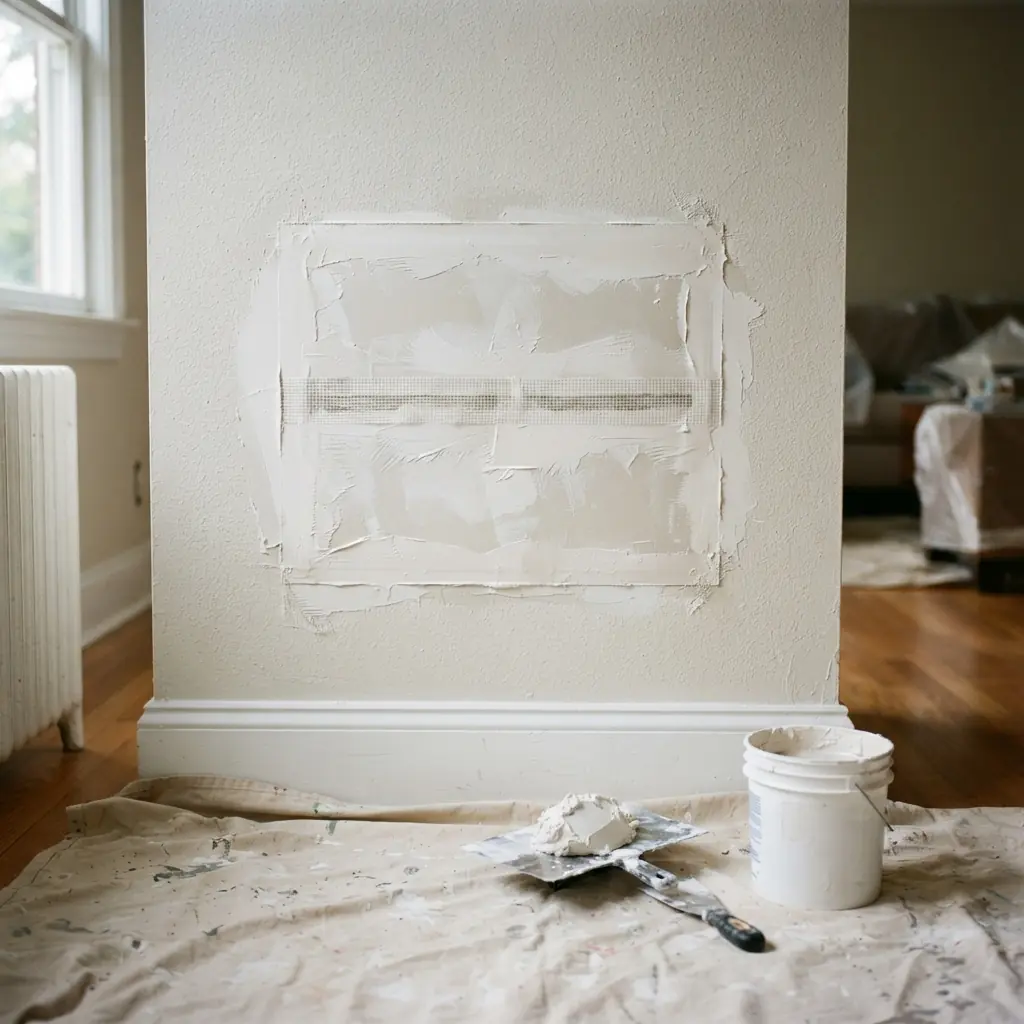
Once the mold is out, there is a hole in the wall. Closing it up properly is part of the job, and it is also where jobs go wrong.
Here is what the replacement involves and when it should happen.
Why it is cut out
The paper face of drywall feeds mold, and the gypsum behind it absorbs water. A surface wipe may lighten a stain but not the growth inside.
Cutting out the affected section is cleaner and more reliable than trying to treat it in place. The edge of the cut should land on a clean, dry stud.
Waiting for the cavity to dry
New drywall goes up only after the cavity behind it is clean and readings show it is dry. Closing a damp wall brings the problem back.
Find out what reading they use and how they will show you the result. A short note with the number and the date is a reasonable request.
Hanging, taping and finishing
Replacement drywall is cut to fit, fastened, taped, covered in joint compound and sanded smooth. Paint comes last, usually with a stain-blocking primer on any area where the old surface was marked.
Some mold crews do this themselves. Others stop at removal and a general contractor takes over. Both are fine as long as someone clearly owns the handoff.
Know who is doing what
Before work begins, ask whether the quote includes new drywall and paint. If not, get a separate price for that work.
Send us your address, and we will pass the request to a local crew that serves your town.
Frequently Asked Questions
Can drywall be cleaned instead of replaced?
Sometimes, if the growth is limited to a small area on a hard, painted surface. Once mold has soaked into the paper or the gypsum, replacement is the more reliable fix. The crew will tell you which approach fits what they see.
How long until I can paint?
Not until the drywall has been installed, taped and finished, and the compound has dried. That depends on the size of the repair and the weather. Ask the crew or contractor for a realistic timeline once the cavity has passed its moisture check.
Who does the drywall work?
Some crews include it, and others hand off to a general contractor or drywall finisher. Ask in advance. If it is separate, get its own written price, and confirm that the area has been checked and is dry before the new drywall goes up.