You smell it, but there is nothing to see. Paint is bubbling on one wall, or a stain keeps coming back after you cover it. Mold inside a wall is common, and it is also easy to overreact to.
This is how it gets found without tearing the room apart.
Finding it without demolition
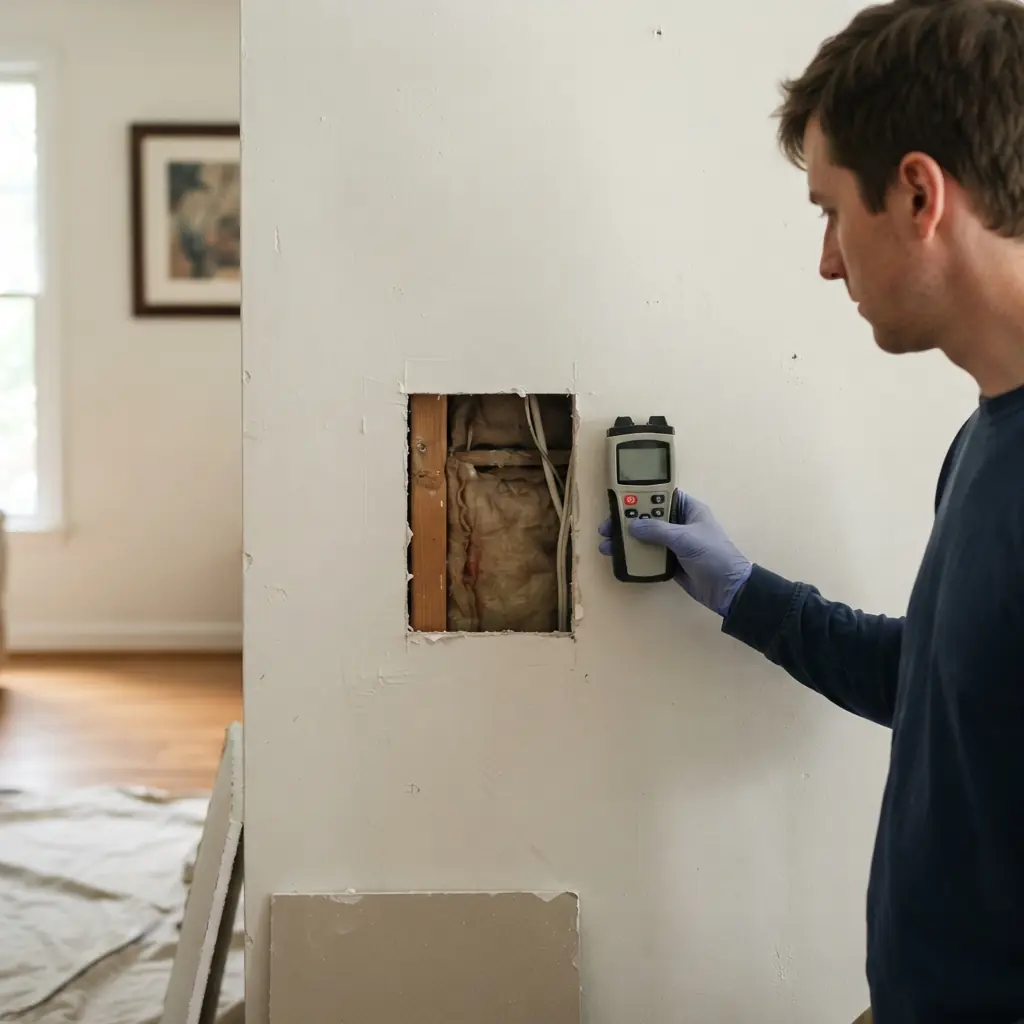
A moisture meter reads dampness through the surface, and a thermal camera shows temperature patterns that point to wet spots. Together they narrow down where to look.
If readings are high, the crew makes a small opening, usually a few inches wide, to see what is behind it. Many times that is enough to answer the question.
Cutting out what is affected
If mold is on the drywall or the framing behind it, the affected section comes out. Drywall that has mold growing on its paper face or that is soaked usually cannot be cleaned.
The studs and cavity are cleaned and dried. Insulation that is wet is removed. Only then is new drywall installed, taped and finished.
Why a wall gets wet
Plumbing leaks, window leaks, exterior wall seepage and condensation are the usual sources. A pipe in the wall may need a plumber. A failing window seal or flashing is a different repair.
Find out what they found and who needs to fix it. Removing the mold without fixing the leak is a repeat visit waiting to happen.
Do not guess
Cutting into a wall without knowing what is there makes a mess and can spread spores. A short inspection first is often the smarter route.
Send us your address and where you notice the smell, and we will pass the request to a local crew that serves your area.
Frequently Asked Questions
Will they have to tear out the whole wall?
Usually not. A crew can often find the problem with a meter and a small inspection opening, then remove only the affected section. Large areas of growth or water damage need more. Ask them to show you what they found before any large cut is made.
Can I just replace the drywall myself?
Only after the mold and moisture are dealt with. Putting new drywall over damp framing or leftover growth means the problem returns. If the area is small and dry, a handy homeowner might patch it, but get someone to confirm the cavity is clean first.
What if the smell remains after removal?
A lingering smell may mean moisture or growth is left somewhere, such as another part of the wall or a nearby area. Tell the crew, and ask them to recheck with a moisture meter. Do not close up the wall again until the source is confirmed.