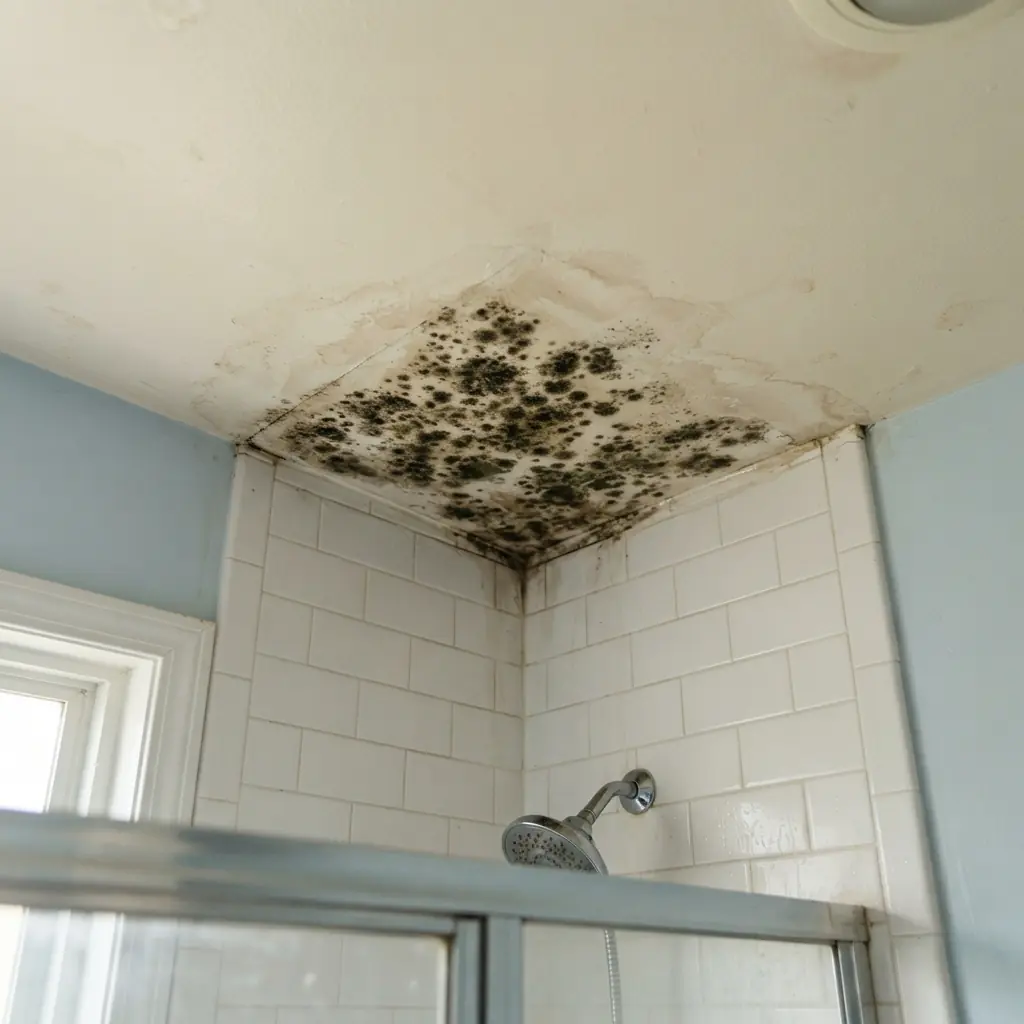
Mention black mold and most people picture the worst. The truth is less dramatic and more practical: you cannot tell what you have by color, and you should not guess.
Here is how to handle dark growth sensibly and when to bring someone in.
What you are actually seeing
Many molds appear dark green, gray or black, and the same species can look different depending on the surface. A stain on a ceiling could be mold, water damage, or both.
If you want to know what it is, a crew can take a sample for a lab. If it is plainly growth, the job is the same either way: remove it and fix the moisture.
Keep it undisturbed
The common mistake is scrubbing or blowing at a patch without protection. That throws spores into the air and across the room. Wearing a respirator and gloves is a minimum, and large areas call for containment.
Do not paint over it. Paint hides the problem and the growth continues underneath. Stop, cover the area lightly, and keep the rest of the house closed off from it.
When to call someone
Call a crew when the patch covers a large area, returns after cleaning, sits inside a wall or ceiling, or when anyone in the house has asthma or allergies. Water damage behind the growth is also a reason.
The crew will find the moisture, seal off the area, remove what is affected and dry the space. Ask for the scope in writing.
Next steps
Take a photo, note where it is and when you first saw it, and send us your town. We will pass the request to a local crew that serves your area.
They will look at it in person before giving an estimate.
Frequently Asked Questions
Is black mold toxic?
Some molds produce substances that can bother people, but color does not tell you which kind you have. Dark growth is not automatically worse than any other. The sensible response is the same: avoid disturbing it, keep the area closed off, and have it assessed and removed properly.
Can I clean black mold with bleach?
Bleach can lighten the stain on hard surfaces but may not reach growth inside porous materials like drywall. Mixing it with other cleaners is dangerous. For small hard-surface spots, soap and water works. For larger or porous areas, a professional is the safer route.
Do I need to test it first?
Not usually. If you can see growth, removal is the answer, and a test rarely changes the plan. Testing helps when mold is suspected but not visible, or when you want proof for a dispute. Find out whether testing makes sense for your situation.