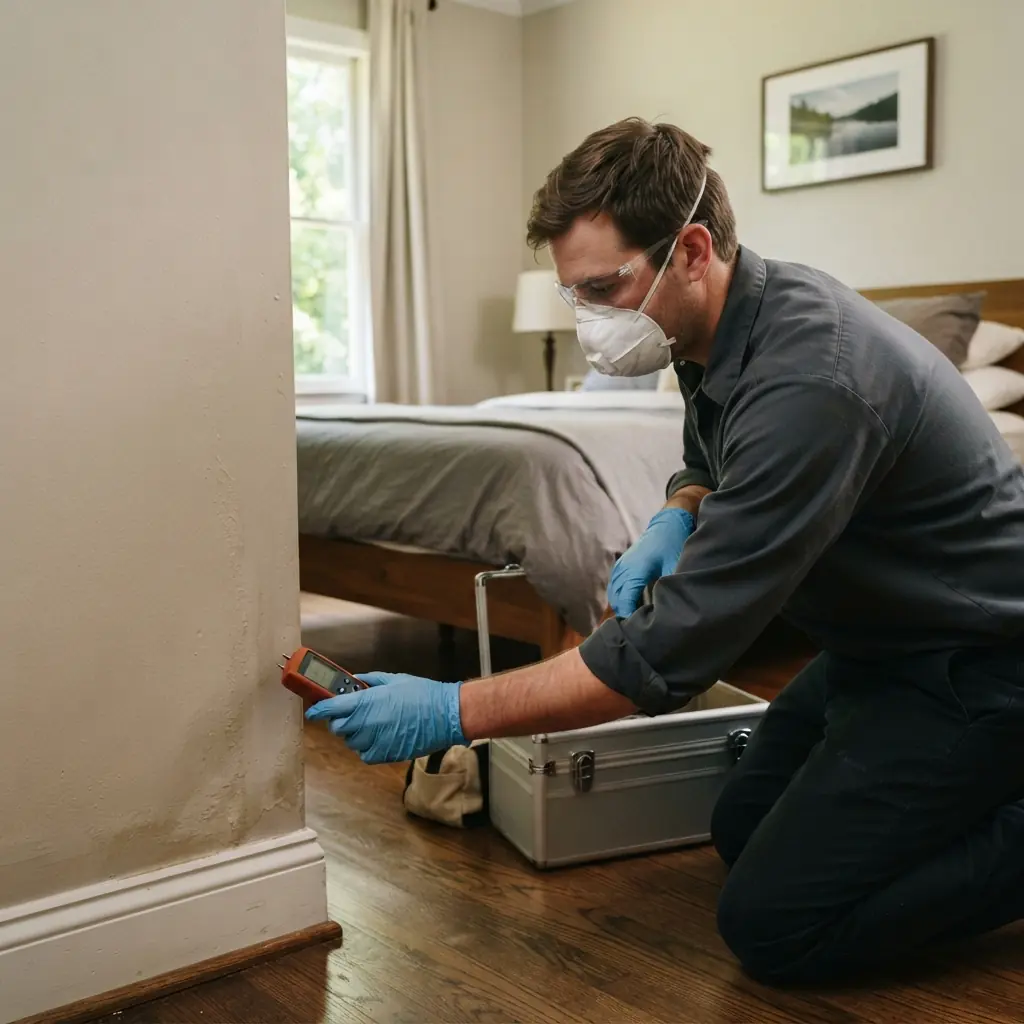
Mold in a house rarely announces itself politely. It shows up as a stain on a ceiling, a damp smell in a closet, or a spot that keeps coming back after you scrub it.
This page explains how mold removal works for a home in Sandy Springs, what separates a surface problem from a bigger one, and what to ask before you let anyone start cutting into drywall.
When mold is a job for a crew
A patch of mildew on a shower wall is one thing. Growth across a ceiling, mold under carpet, or a musty smell with no visible source is another. If it covers a large area, comes back after cleaning, or follows a leak, bring in a professional.
Mold needs moisture to live. Cleaning the spot without finding the water leaves the problem in place, which is why recurring mold is the clearest sign that the job is bigger than a sponge.
How the work is done
Most jobs follow the same order. The crew locates the moisture and the affected materials, then closes off the area with plastic sheeting so spores do not drift into the rest of the house.
From there, materials that cannot be cleaned, such as soaked drywall or insulation, are cut out and bagged. Solid surfaces like framing are cleaned. The area is dried completely before anyone closes it back up.
The crew will explain which of those steps your house needs. Ask for them in writing.
Sandy Springs homes and moisture
Sandy Springs sits along the Chattahoochee River, and the Riverside district borders the water on the city's west side. Georgia summers are humid, and a damp stretch can keep a closed-up crawl space, attic or bathroom wet for weeks.
Much of the city grew after Georgia 400 and Interstate 285 opened in the early 1960s, so plenty of houses have decades of wear behind their walls. We can't tell you what is inside yours. A crew can look and tell you.
Where to start
Tell us your town and what you are seeing. We will pass your request to a local crew that serves your area. They look at the home, explain the scope, and give you a written estimate before work begins.
You decide whether to go ahead.
Frequently Asked Questions
Can I remove mold myself?
Small surface spots on hard materials can often be cleaned by a homeowner. Growth that covers a large area, returns after cleaning, or sits in drywall, insulation or ductwork is better handled by a professional. Wearing a respirator and gloves matters either way, and fixing the moisture is the part that decides whether it comes back.
Do I need to leave the house during mold removal?
Not always. A crew that seals off the work area with plastic sheeting and filters the air can often work while the rest of the house stays in use. Larger jobs, or households with anyone who has asthma or allergies, may need a different plan. Find out how they will protect the rooms they are not working in.
What should a mold removal estimate include?
A good estimate names the rooms or areas, the materials to be removed or cleaned, how the work area will be contained, and what happens about the moisture source. It should also say whether rebuilding is included. If the estimate is one line with a single price, ask for the breakdown.