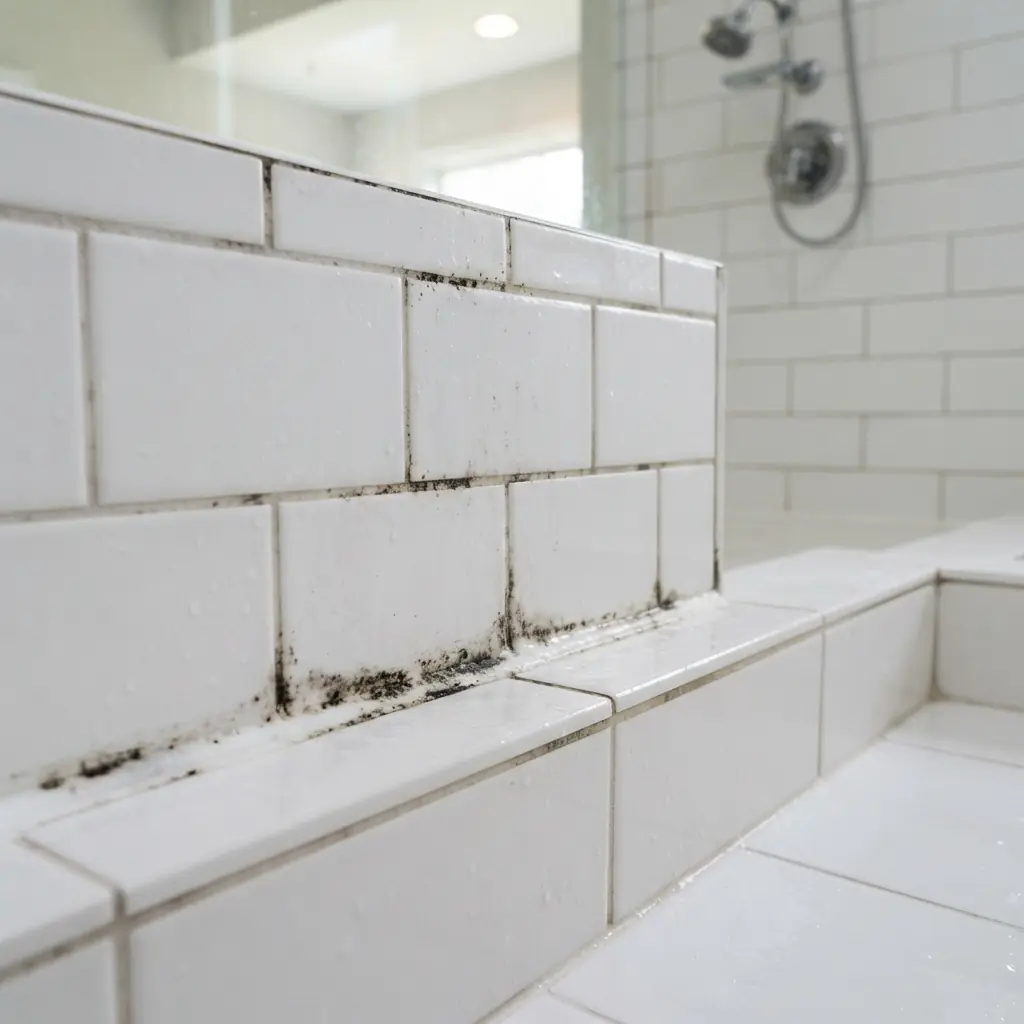
Every bathroom grows a little mildew in the corners. When it comes back a week after you scrub it, or spreads past the grout, the cause is bigger than your cleaning routine.
Here is what to check and when to call someone.
Surface mildew versus a deeper problem
Mildew on tile and grout can often be cleaned with a bathroom cleaner and a brush, and kept in check with ventilation. Mold on drywall, around the tub or on the ceiling is harder to remove.
If walls feel soft, paint is peeling, or you see staining on the ceiling below the bathroom, water is getting somewhere it should not.
Ventilation checks
A fan should pull steam out of the house. A weak or noisy one may not move enough air. Some fans vent into the attic instead of outdoors, which just moves the moisture upstairs.
Running the fan during showers and for a while afterward makes a real difference. Check that the duct is connected and leads outside.
What a crew does
The crew finds where moisture is hiding, using a moisture meter on walls, floor and the ceiling below. Growth on porous materials is removed, and hard surfaces are cleaned. Failing caulk is cut out and replaced.
If a leak is the cause, a plumber handles it. The mold crew works around that repair, so ask who coordinates the two.
Break the cycle
Mold that returns tells you the room is still damp. Fix the cause, then clean, and it tends to stay gone.
Send us your address and describe what you see, and we will pass the request to a local crew that serves your area.
Frequently Asked Questions
Can I clean bathroom mold myself?
Small areas on tile, grout and caulk often can be cleaned with household products and a brush, with a mask and gloves. Growth on drywall or the ceiling, or a spot that returns, is better handled by a crew. Never mix bleach with other cleaners.
Do I need to replace the caulk?
If it is dark, cracked or peeling, yes. Caulk that mold has gotten under cannot be cleaned well. Cut it out, let the area dry fully and apply new caulk. A crew can do this as part of the job or you can do it once the area is dry.
What if the mold is behind the tile?
That means moisture is getting behind it, and the tile or wall may need to come off. A crew uses a moisture meter to confirm, then removes the affected section. A plumber may be needed if there is a leak. Do not just re-caulk over it.