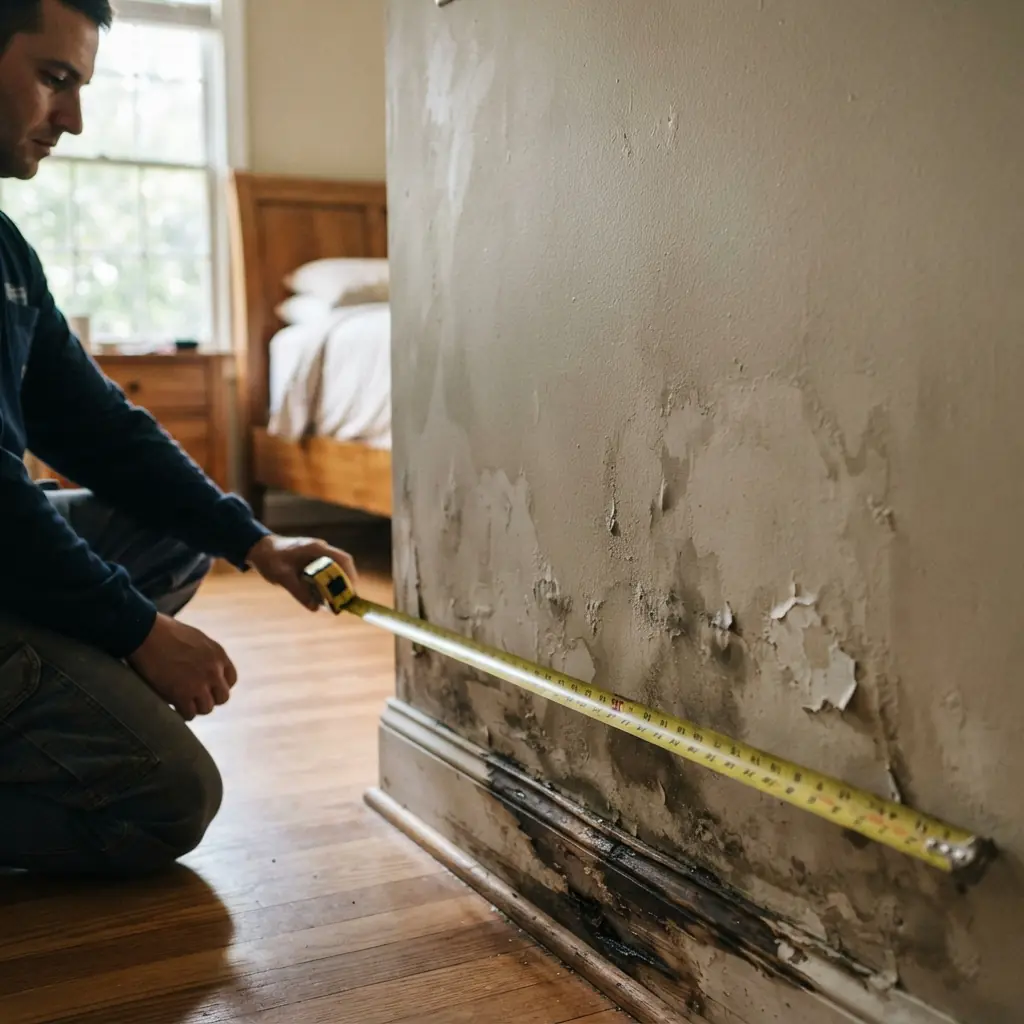
A per-square-foot figure sounds clean and easy to compare. In practice it is only as useful as what stands behind it.
Here is how crews measure a job and what to ask when you see a number quoted that way.
How jobs get measured
The crew measures the area that has growth or damage, plus the area around it that needs treatment. They may also measure wall and ceiling surfaces in a room, not just the floor area.
Ask exactly what is being measured. Two quotes using different measurements can look far apart when the work is the same.
What a rate does not cover
A per-foot rate often assumes ordinary conditions. Containment, air filtration, disposal and drying equipment may be priced separately. So might removal of materials like insulation or flooring.
If the rate looks low, ask what is not in it. A low number with a long list of extras can cost more than a higher all-in price.
Making quotes comparable
Give each crew the same information and ask them to list the same items: area measured, materials to remove, containment, drying, disposal and rebuilding. Then you can compare line by line.
If a number changes once walls are opened, ask how that will be handled and who approves it before extra work starts.
What to do with the number
Treat a per-foot figure as a starting point, not a price. The real cost comes from a visit and a written scope.
Send us your address and what you are seeing, and we will pass the request to a local crew that serves your town.
Frequently Asked Questions
Why do two quotes for the same room differ so much?
They may be measuring different areas, including different services, or assuming different conditions. One may include containment and drying while another does not. Have the crew list what is included so you can compare the same work.
Can I get a firm price before the work starts?
You can get a written estimate based on what the crew can see. If hidden damage turns up when walls are opened, the scope may change. Ask how that is handled and whether you approve any extra work in writing before it starts.
Does a bigger area always cost more?
Usually, but not in a straight line. Some costs, like setting up containment and equipment, apply to any job. A small job in a hard-to-reach spot can cost more per foot than a larger one in an open room. Details of the space matter.