The plumber has gone and the leak is stopped. The hard part is what is left behind: wet drywall, damp carpet pad, a cabinet base that will not dry.
What you do in the days that follow decides whether you end up with a small repair or a mold job.
What should I do in the first week after a leak?
Stop the water, remove standing water and wet items, and start drying with fans and, if you have one, a dehumidifier. Pull back wet carpet or baseboard so air can reach the materials. Take photos for your records and call your insurer if damage may be covered. Check again after a few days for odor or staining. If wet materials stay damp, bring in a local crew.
Get the water out
Remove standing water and move wet items out of the room. Open windows if the weather allows, run fans, and run a dehumidifier if you have one. Warm, still, damp air is what mold wants, so keep it moving.
Pull back wet carpet and baseboards if you can, so air reaches the materials underneath. Do not run a vacuum on a wet floor unless it is meant for water.
Document everything
Take photos and video of the damage and the water source before you clean up. Keep receipts for repairs and any equipment. Write down dates.
If you may file an insurance claim, call your carrier early and ask what they need. We do not handle claims, but good records make that conversation easier.
Check again in a few days
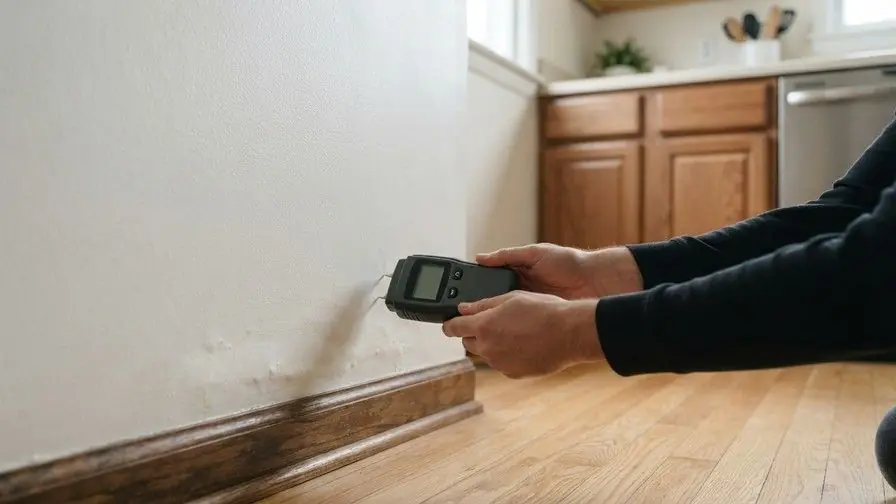
Materials can look dry on the surface and still be wet inside. After several days, smell the area and look for new staining, bubbling paint or soft spots. A moisture meter gives a clear answer, and a crew can bring one.
If the wall, floor or ceiling is still reading damp, or you notice a musty odor, do not cover it up with paint or new flooring. Get it checked first.
When to bring someone in
Bring in a crew if materials stayed wet for several days, if anyone in the house is sensitive to mold, or if you cannot find where the moisture is going.
Send us your town and what happened, and we will pass your request to a local crew that serves your area.
Frequently Asked Questions
Can I use bleach on wet drywall?
Bleach does not dry anything and does not fix drywall that has soaked up water. It can also create fumes in a closed room. Focus on drying and removing damaged material. If mold has started, a crew can advise on cleaning and what to remove.
Do I need to remove all wet carpet?
Not always. Clean-water spills that are dried promptly may be saved, especially the carpet itself. Pad usually is not. If carpet stayed wet for days or has any odor, replacing it is the safer choice. A crew can check moisture and advise.
What if the leak was inside a wall?
That is harder to see. Dampness inside a wall can last a long time. A moisture meter or a small inspection opening shows what is happening. Do not close the wall or paint over the area until it is confirmed dry.