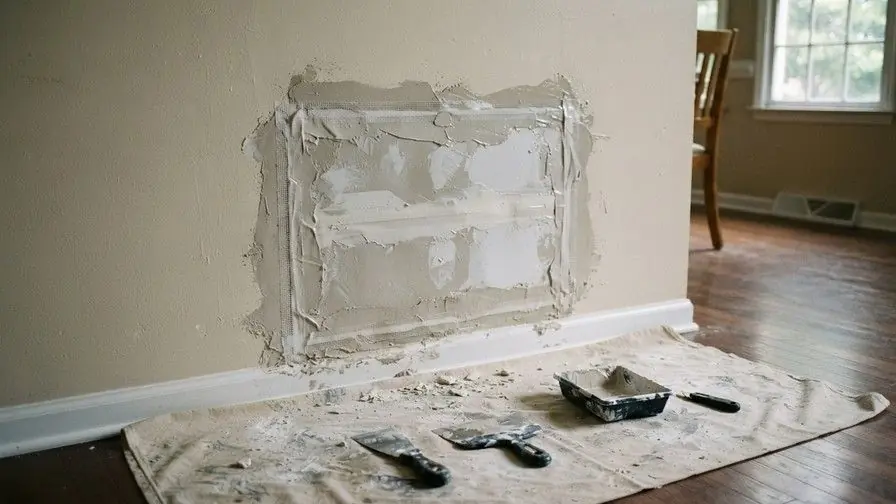
Once the mold is out, there is a hole in the wall. Closing it properly is where some jobs go wrong.
Here is the order of work and what to check before anyone hangs new board.
When can new drywall go up after mold removal?
Only after the cavity is clean and moisture readings show it is dry. Closing a damp wall brings the problem back. Once cleared, new drywall is cut to fit, fastened, taped, covered in joint compound, sanded and primed. We connect Sandy Springs homeowners with a local crew that removes the mold and can tell you whether the area is ready.
Why drywall is cut out
The paper face of drywall feeds mold, and the gypsum behind it absorbs water. A wipe may lighten a stain but not the growth inside.
Cutting out the affected section is cleaner and more reliable than treating it in place. The cut edge should land on a clean, dry stud.
Wait for dry
New drywall goes up only when moisture readings show the cavity is dry. Ask how they will show you. A note with the reading and date works.
A rushed repair is the most common reason mold returns. A few extra days of drying cost less than redoing the wall.
Hang, tape, finish
Replacement board is cut to fit, fastened, taped and covered with joint compound, then sanded smooth. Paint comes last, usually with a stain-blocking primer.
Some mold crews do this. Others stop at removal and a drywall contractor takes over. Both work as long as the handoff is clear.
Know who is doing what
Ask whether the quote includes new drywall and paint. If it does not, get a separate price.
We pass requests like yours to a local crew. Start by sending us your town.
Frequently Asked Questions
Can moldy drywall be cleaned instead?
Sometimes, if growth is limited to a small area on a hard, painted surface. Once it soaks into the paper or gypsum, replacement is more reliable. The crew will say which approach fits what they find.
What about the insulation behind it?
Wet or moldy insulation is removed and replaced. Dry, clean insulation can often stay. The crew should tell you which sections they plan to remove and replace before the wall is closed.
Can I do the finishing myself?
If you are handy, yes, once the cavity is confirmed dry and clean. Taping and finishing takes practice, and a smooth result needs patience. Many homeowners hire a drywall finisher for the final coats.