A price per square foot sounds simple. In practice it is a shorthand that hides a lot of detail.
If you see one in a quote, here is what to ask and how to compare it with another.
How does per-square-foot pricing work for mold removal?
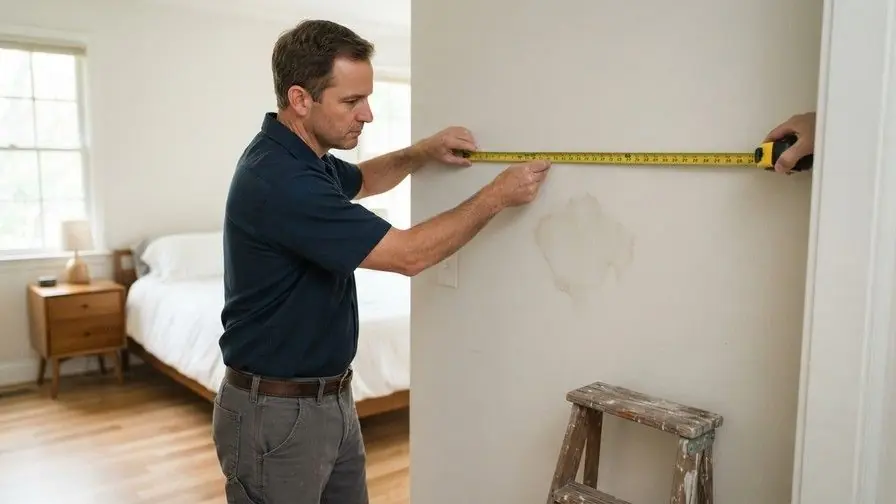
A crew measures the affected area and applies a rate, usually adjusted for the type of material, the access and the amount of containment needed. The rate is a starting point, not a final price. Equipment, disposal, drying and rebuilding may be priced separately. Ask what a per-foot number includes. We connect Sandy Springs homeowners with a local crew that gives a written estimate.
What is being measured
Some crews measure the floor area of the room, others measure only the affected surface, others add a buffer around it. A wall and a ceiling count differently from a floor.
Ask exactly what is being measured. Two crews can be pricing the same room in different ways.
What the rate assumes
A rate usually assumes ordinary conditions. Tight access, a lot of insulation or mold inside walls changes the work. Containment, air filtration and disposal may be extra.
If a per-foot rate seems low, ask what is not included, and whether the final price can change once the work starts.
Comparing apples to apples
Have the crew list the same items: area, materials to remove, containment, drying, disposal and rebuilding. A table makes the comparison much easier.
If one quote is much lower, find out which line items are missing. A narrow scope can look cheap until the extras arrive.
Use it as a clue
A per-foot figure tells you roughly how a crew thinks about the job. The written estimate after a site visit tells you what it will cost.
Let us know your town, and a local crew will be in touch about your request.
Frequently Asked Questions
Why do crews use square footage at all?
Because it gives a consistent starting point across different jobs. It is easier to explain than a list of tasks. But it is only a summary. The details of materials, access and containment determine what the job actually involves.
Is a higher per-foot rate worse?
Not necessarily. A higher rate may include containment, equipment, drying and disposal that another crew charges separately. Compare the total scope, not just the rate. Have the crew list what is included.
Can the area measured change during the job?
It can, if hidden damage turns up behind walls or under floors. Ask how the crew handles changes and whether they will get your approval in writing before extra work begins. That protects both of you.