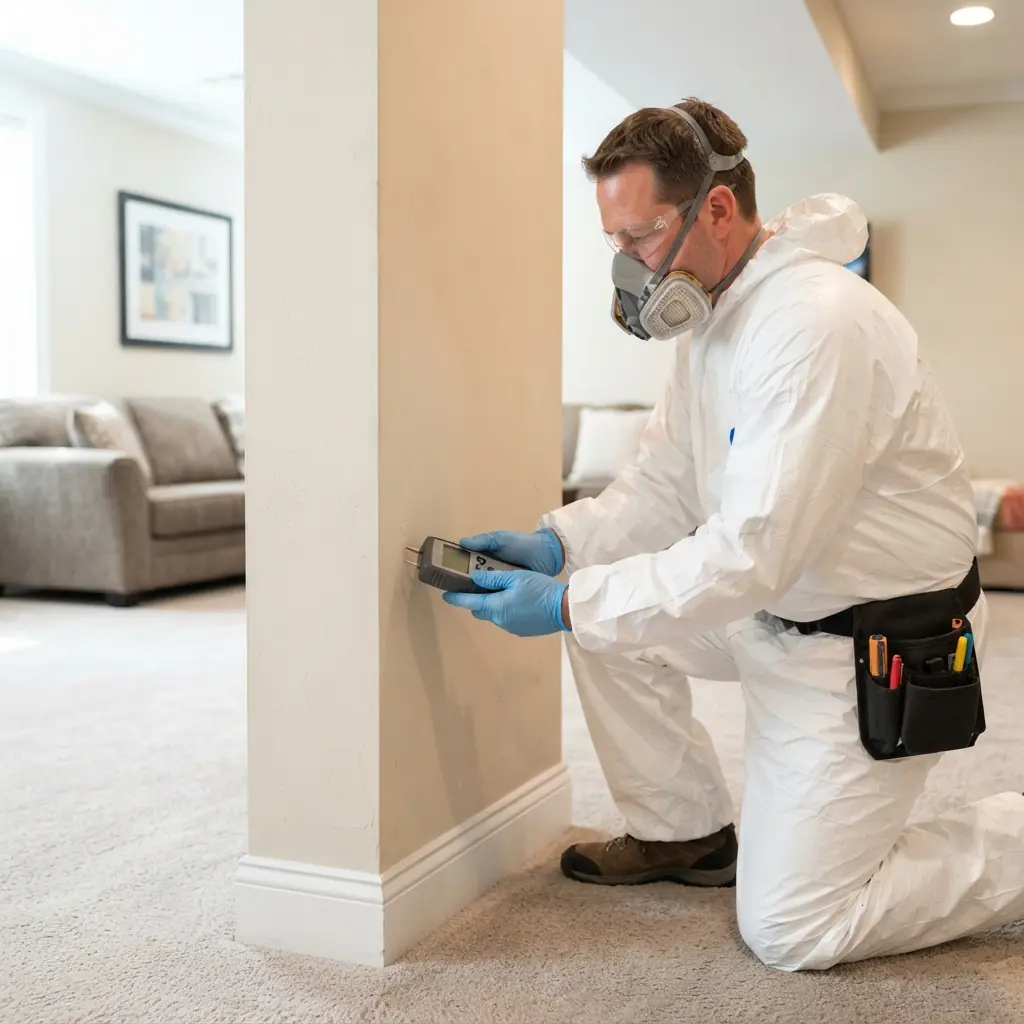
Basements collect water in ways upstairs rooms do not. A little seepage at a wall joint, a dehumidifier that stopped working, or a finished room with no airflow can all lead to mold.
Here is what the work looks like and what to ask before you agree to it.
Finishes make it harder
Mold in an unfinished basement is often limited to a wall or the base of a stud. In a finished basement it can hide behind drywall, carpet and baseboard where you cannot see it.
If you smell mold but find nothing, ask about moisture readings and a small inspection opening. That is far less invasive than tearing out a whole wall on a hunch.
What removal involves
The crew contains the area and removes what cannot be dried: soaked carpet, pad, drywall and insulation that has taken on water. Concrete, block and framing are cleaned.
After that comes drying, and it matters more than people expect. Putting new drywall over a damp wall starts the whole thing over. A crew should confirm that moisture readings are normal before anyone rebuilds.
Water source first
Seepage after heavy rain, a cracked foundation wall, a leaking water heater or a laundry hookup can all feed basement mold. Some of those repairs belong to a plumber or a foundation contractor, not the mold crew.
Tell the crew what you have noticed and when. A pattern, such as mold only after storms, points them toward the right fix.
Getting a crew
Describe what you are seeing and tell us your town. We will pass the request to a local crew that serves Sandy Springs and nearby areas.
Plan on a visit and a written scope before any work starts.
Frequently Asked Questions
What does basement mold smell like?
A damp, earthy or musty smell, similar to wet cardboard or an old closet. The smell can show up before you see any growth, especially behind finished walls or under carpet. If the odor is strong or keeps returning, have a crew check for hidden moisture.
Can I keep my finished basement furniture and carpet?
Hard furniture can often be cleaned. Carpet and pad that have been wet and moldy usually cannot be saved. Upholstered pieces are case by case. The crew will point out what they can clean and what they would remove, so ask before the work starts.
Do I need a plumber too?
Maybe. If a pipe, water heater or washing machine hookup is leaking, a plumber fixes the leak and the mold crew handles the growth. Mold removal does not stop water from coming in. Find out whether there is an active leak.