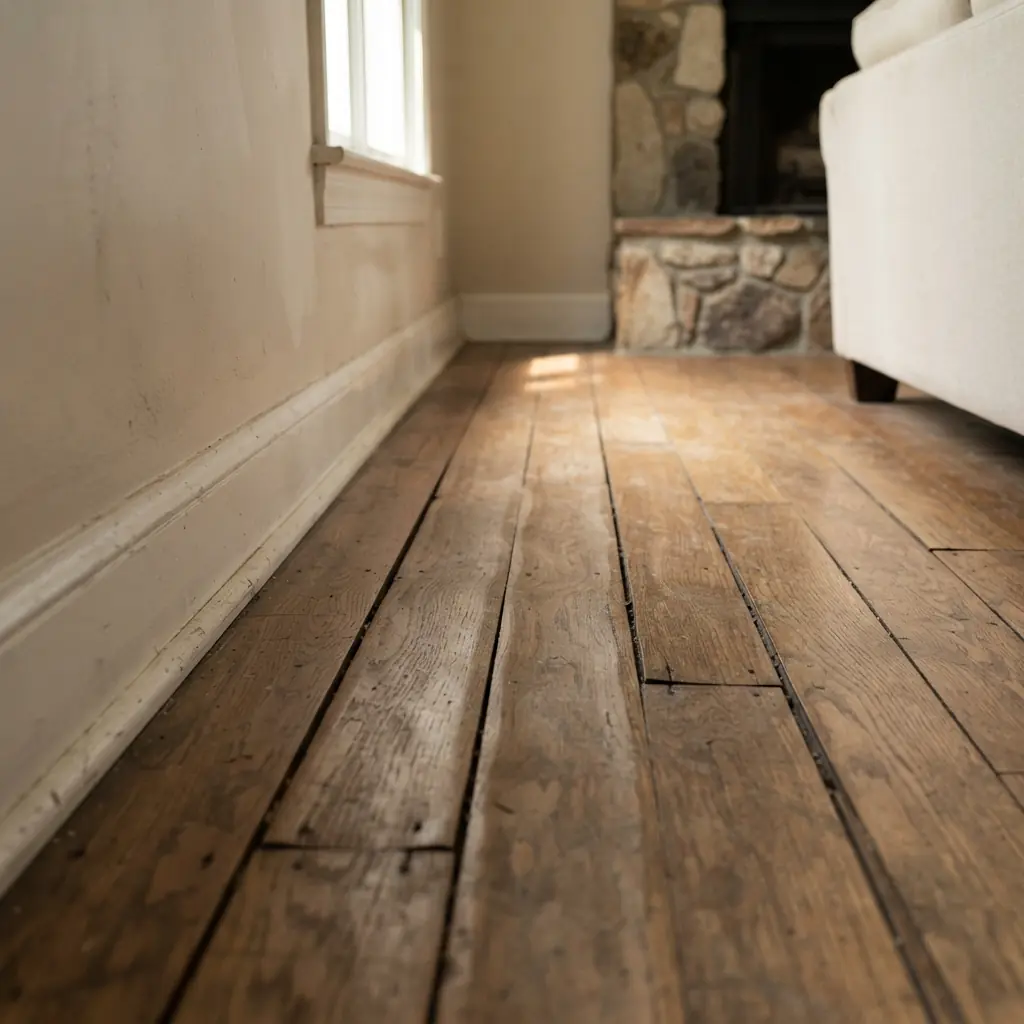
Hardwood floors hide a lot. Boards can look fine on top while the subfloor underneath stays damp.
If a floor has started to cup, stain or smell, here is how the problem is checked and what happens to the wood.
How the floor gets wet
The usual sources are a plumbing or appliance leak, moisture rising from a damp crawl space or basement below, and spills or wet spots that were never fully dried.
Wood absorbs water and swells. As it dries unevenly, edges curl up, known as cupping. That is often the first visible sign.
Checking before pulling anything
A moisture meter reads the boards and the subfloor. If readings are normal and the surface looks clean, the floor may only need drying or careful cleaning.
If readings are high or mold is visible at the seams, the crew may lift a few boards to look at the subfloor and joists. That small opening shows how far the problem goes.
What gets removed
Boards with mold growth or serious warping are typically removed. The subfloor underneath is cleaned or replaced, and the space is dried. New flooring goes in after moisture readings are normal.
Refinishing can fix minor cupping once the wood has dried, but not mold. Ask whether the quote includes replacing and refinishing the floor, since that can be a separate job.
Before you refinish
Sanding over damp or moldy boards is a common mistake. Make sure the cause is fixed and the area is dry before anyone refinishes.
Send us your address and what you see, and we will pass the request to a local crew that serves your town.
Frequently Asked Questions
How do I know whether mold is under my floor?
Look for cupped or stained boards, a musty smell and soft spots. A moisture meter gives a clearer answer, and a crew may lift a board to look. Do not rely on appearance alone, since the floor can look fine while the subfloor is wet.
Does a basement or crawl space below matter?
Yes. Moisture from below can rise into the subfloor and boards. If the space under the floor is damp, fixing it may be part of the answer. Have the crew check the space below as well as the floor itself.
Who replaces the flooring afterward?
Often a flooring contractor rather than the mold crew. Some crews handle rebuilding, but many do not. Ask the quote to say whether flooring replacement is included, and make sure the area is confirmed dry before new boards go down.