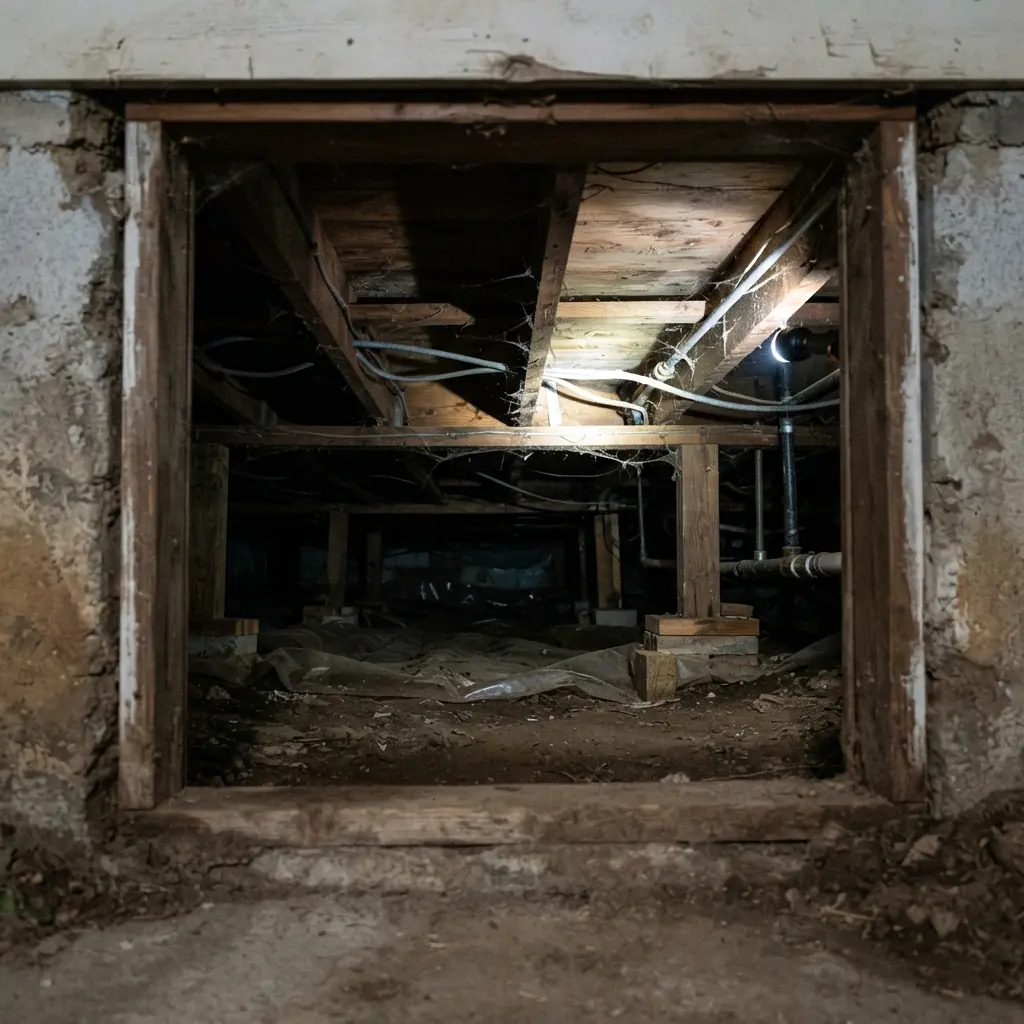
The crawl space is the part of the house most people never see. If yours has a musty odor that comes up through the floor, or if a floor feels soft, it is worth a look.
Here is how crawl space mold is usually handled, and what to ask about the moisture behind it.
Why crawl spaces grow mold
A crawl space is dark, closed in and close to the ground. Warm, humid air that gets in can settle on cooler wood and condense. A leaking pipe, a gutter that dumps water against the foundation, or bare soil with no cover can add more.
Mold then grows on joists, subflooring, insulation and anything stored down there. The growth is a symptom. The cause is water, and the cause is what a good crew will want to find first.
What removal looks like
The crew checks the space with a light and a moisture meter, then sets up for working in a tight area. Insulation that is wet or growing mold is usually removed. Wood is cleaned or treated, and badly damaged pieces are flagged for repair.
Once the growth is dealt with, the space has to dry. Some homeowners then ask about a vapor barrier or a dehumidifier. Those are separate from mold removal, and a crew should tell you plainly whether they are part of the quote.
Questions worth asking
Ask how the crew will get in and out, how they will handle debris, and whether the quote includes the moisture fix or only the cleanup. Ask whether they will photograph the space before and after.
If the house is on or near the Chattahoochee side of town, mention it. Low ground and heavy rain are worth telling a crew about, and they can plan for drainage.
What to do next
If you can smell the crawl space from inside the house, or a floor feels soft or springy, tell us. We will pass your details to a local crew that serves Sandy Springs.
They look at the space first and explain what they find.
Frequently Asked Questions
How do I know if my crawl space has mold?
A musty odor in the house, visible fuzzy or dark patches on joists or insulation, and floors that feel soft are common signs. You can look with a flashlight from the access door if it is safe. If you cannot see well or do not want to go in, a crew can inspect it for you.
Will the mold come back after removal?
It can if the moisture source is still there. Removal clears the growth, but humid air, leaks and poor drainage keep feeding new mold. Find out how the quote handles the moisture, and what they recommend afterward to keep the space dry.
Is crawl space encapsulation the same as mold removal?
No. Mold removal cleans or removes the growth. Encapsulation seals the space with liners to control moisture. Some homeowners do both, but they are separate jobs. Ask whether the crew offers encapsulation or can refer you to someone who does.