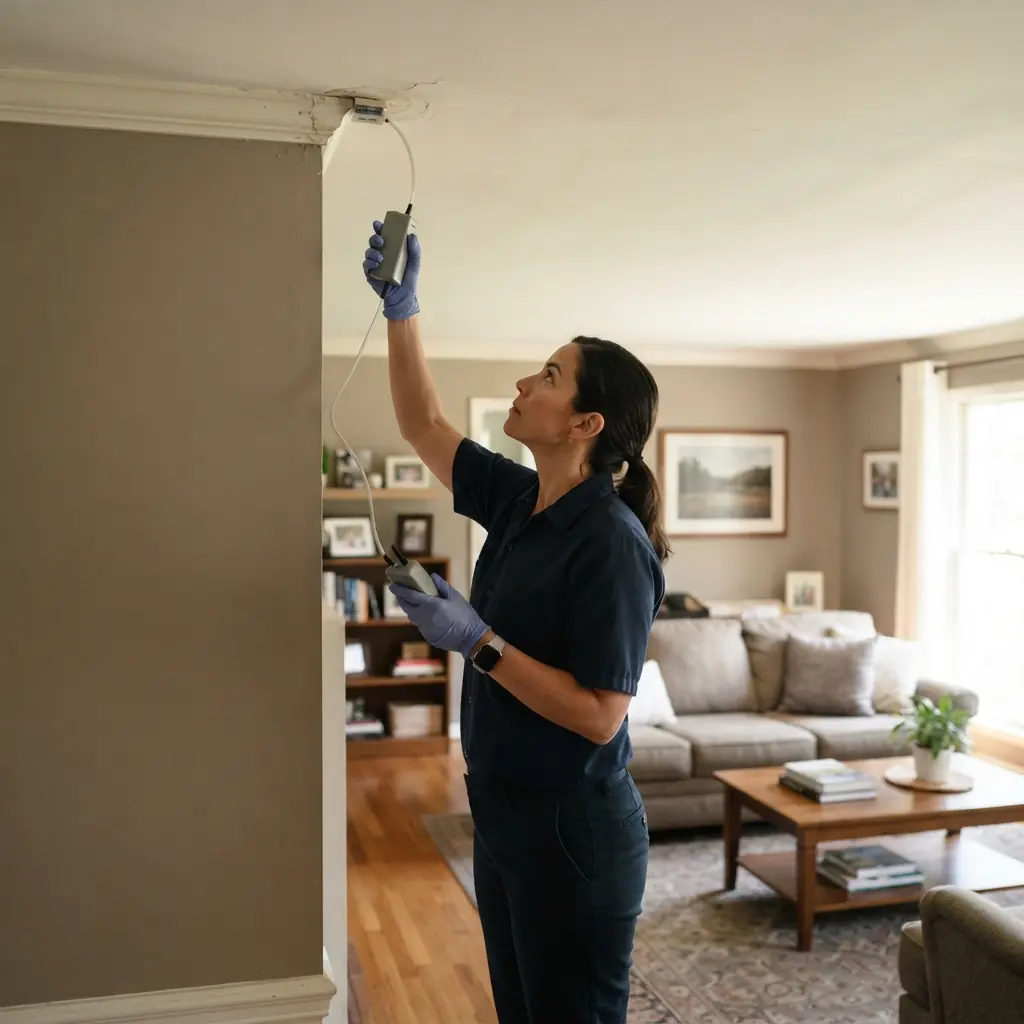
A stain, a smell or a damp wall does not always mean mold, and it does not always mean you can skip an inspection either. An inspection answers the question before you spend money on removal.
This page covers what one includes and what a useful report looks like.
What an inspector looks for
The inspector walks the home, paying attention to bathrooms, the basement or crawl space, the attic, and anywhere that has had a leak. A moisture meter and a thermal camera help find water that is not visible.
If something looks suspicious, they may take a sample. Samples are sent to a lab, and the results come back as a report. Ask what the lab tests for and how the results are explained.
Testing and what it can tell you
Air samples count spores floating in a room and compare them with outdoor air. Surface samples show what is growing on a specific spot. Neither gives a perfect picture on its own.
Testing is most useful when mold is suspected but not visible, when there is a dispute about whether a problem exists, or when you want a baseline before and after removal. If mold is plainly visible, you may not need a test to know it must be removed.
Keeping it independent
Some companies inspect and remove. Others only inspect. If the same company writes the report and sells the removal, you may want a second opinion on a big job.
That is not an accusation, just a sensible question. Ask whether the inspector will also do the removal, and whether you can use the report with another crew.
Booking an inspection
Send us your address and what you have noticed. We will pass your request to a local crew that serves Sandy Springs and the nearby towns.
Ask for the report in writing, and keep it for any removal quote.
Frequently Asked Questions
Do I need testing if I can see mold?
Not always. When mold is visible, the answer is usually removal, and testing adds cost without changing the plan. Testing helps with hidden mold, disputes or a baseline before and after removal. Find out whether testing is worth it in your specific case.
How should I prepare for an inspection?
Point out where you have seen stains, smelled odors or had leaks. Make sure the inspector can reach the attic hatch, crawl space door and basement areas. Mention any past water damage. The more history you share, the better they can focus their search.
Is the inspector the same person who removes the mold?
Sometimes, sometimes not. Some crews do both, and others only inspect. If one company does both, you can ask for the written report and compare it with a second removal quote. Either way, ask who will do the work before you book.