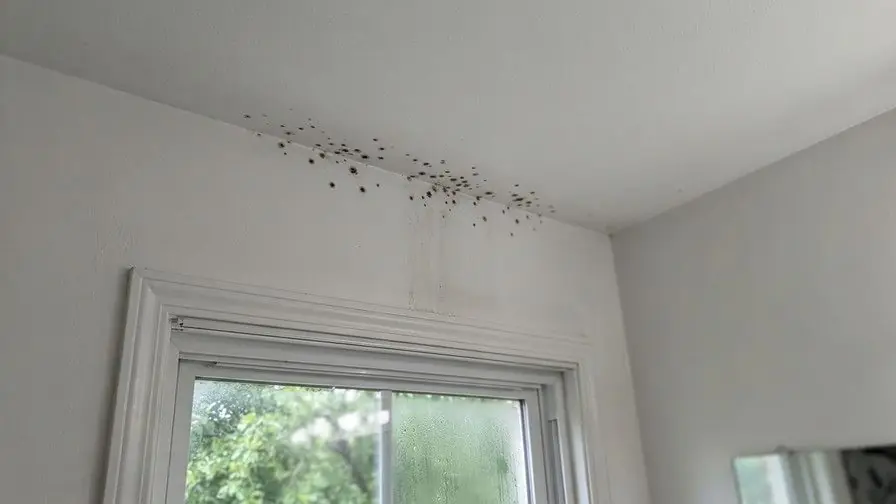
A dark spot on the ceiling and the word that jumps to mind is mold. Sometimes it is. Sometimes it is a water stain, dirt or soot.
The better questions are how big it is, whether it is spreading, and what is feeding it.
How do I know if a dark spot is mold?
You cannot be sure by color. Mold, mildew, soot and water stains can all look dark. Signs it is likely mold include a musty smell, spots that spread or return after cleaning, fuzzy or slimy texture and growth near moisture. A moisture meter or a lab sample gives a clearer answer. We connect Sandy Springs homeowners with a local crew that can check.
What the spot might be
Mildew on tile and grout is common and manageable. A ceiling stain with a brown ring is often water. Dark spotting in a corner could be mold, especially near a window or in a room that stays damp.
Look at the texture. Mold can look fuzzy, powdery or slimy. Water stains are flat. A musty smell points toward mold.
What not to do
Do not scrub it dry or blow air across it, which sends spores into the room. Do not paint over it. Do not mix bleach with ammonia or other cleaners.
If you must clean a small spot on a hard surface, use a mask, gloves and soap and water, and keep the area ventilated. Anything larger should wait for a professional.
When it is time to call
Call if the spot covers a large area, comes back after cleaning, sits on drywall or a ceiling, or is in a room where someone is sensitive to mold. Call if there has been a leak.
A crew will check the moisture, assess how far it goes and tell you what removal involves. Sampling is an option, though it is often unnecessary when growth is plainly visible.
Stay calm, then act
Take a photo and note when you first saw it. Keep the room ventilated and avoid disturbing the spot.
Send us your town, and we will pass your request to a local crew that serves your area.
Frequently Asked Questions
Is dark mold more dangerous?
Not necessarily. Color does not tell you which mold you have or how much it matters. The size of the problem, where it is and who lives in the house matter more. Treat any growth seriously, and have a crew look at larger or returning patches.
Can I test it myself with a kit?
Home kits can confirm that mold spores are present, which is almost always true somewhere in a house. They rarely tell you how much is there or what to do. A crew with a moisture meter and a trained eye is usually more useful.
Should I move out?
Not for a small, contained spot. For widespread growth, or if someone in the house has asthma or a weakened immune system, ask a crew or your doctor. The right answer depends on how much mold there is and where.